21 May, 2007


18 May, 2007
Executive Privilege
Stephen Heersink posts some timely, lucid, and polemic thoughts on Executive Privilege as practiced by the current occupant of the Oval Office. I'm going to post some quotes and comments below, but please do read the entire original; it's well worth the time.
In discussing the history of the idea, Heersink notes:
In discussing the history of the idea, Heersink notes:
Ever since George Washington became the nation's first president, our government's chief executive has appealed to "executive privilege." Infrequently, even hesitatingly, but under "special" circumstances and situations. Executive privilege, in this sense, is an Executive's exemption from accountability and scrutiny for reasons outside the ordinary functions of an open and free society for extraordinary reasons -- often for "national security" and/or "access to candid/privileged counsel."Take note of the particularly narrow construal the Court makes. Now compare that with the increasing invocations of such privilege by the White House. Heersink notes the appalling performance(s) by the current Attorney General as a example of the depths to which the administration has sunk.
But as the Watergate incident reminds us, "executive privilege" cannot be invoked to "hide" corruption, malfeasance, ineptitude, illegality, or the "people's right to know." In 1974, the Supreme Court in United States v. Nixon held: "the valid need for protection of communications between high Government officials and those who advise and assist them in the performance of their manifold duties" and that "[h]uman experience teaches that those who expect public dissemination of their remarks may well temper candor with a concern for appearances and for their own interests to the detriment of the decision-making process." But, it granted no "further reach" of Executive Privilege.
In our system of government, this "absolute executive privilege" just does not stretch as far as Bush's delusional imagination. Observing the nation's Attorney General deliberately deceive Congress and the Public to "hide" the President's actions through dissimulation will necessarily persist, because Gonzales' departure would "open" an opportunity to get past the grand-standing, deceptions, and dissimulation. Gonzales, therefore, has to stay. He's the Wall of Separation. He's the Barrier. He separates "access" and "clandestine," "disclosure" and "obfuscation," "open" and "closed," "executive" and "everyone else."Sad, but true. I have all but given up watching or reading the news. It seems as though every new story drives me further into despair. What new perversion waits just 'round the bend? When the President of the United States believes that the Constitution is "just another piece of paper", what depravity is off-limits? As Heersink notes:
This untenable tension between a delusional man's belief in absolute executive privilege and an excessively-timid and uncertain Congress, held in suspense by a confused, even indifferent, electorate, is in fact a constitutional crisis. We have a Leader who maintains he is the law, he is the executive, he alone has absolute executive privilege, and that he is not accountable to anyone, except his phantom deity! By all ordinary standards, these assertions of "executive privilege" are imperceptibly indistinguishable from a tyrant's claim to absolute rule. As Mr. Bush repeatedly states: He's the Decider.I truly believe that we stand at a crossroads in history. We have a choice: follow our current path and end in tyranny or choose anew the path laid for us by the Founders: Life, Liberty, and the Pursuit of Happiness. Democracy isn't just a choice; it's a moral imperative. Neither is it some sort of gift, in the sense that it can be bestowed upon us by others. We must earn it and by our actions constantly strive to maintain it by fighting those who would take it from us. I believe that history should reflect the fact that our current President is one of the worst if not the worst ever to hold the office and that the current administration has done more damage both to our nation's internal functioning and external image than any other. History should also record the fact that we as a people refused to stand idly by while it happened.
A family is a family is a family...

What makes a family a family? Is it biology or something else? Is the sex of the parents important?
Some elements of society would have us believe that the sex of the parents is of primary importance in determining the legitimacy of families. The rationales for this vary from religious to scientific, with everything from "holy writ" to empirical studies being offered in support of the view that Mom (female) + Dad (male) + child(ren) = Family being the only valid definition.
Those who know me will know that I regard the use of so-called "scriptures" and other revelations in support of any claim of fact to be...well..."of dubious utility" would be a polite way of putting it. Ayn Rand famously said, "the alleged short-cut to knowledge, which is faith, is only a short-circuit destroying the mind". There is no empiric or rational means of verifying revelation and thus it is useless as a means of gaining knowledge. Worse, it is self-destructive as well for it nullifies the very faculty (reason) whose chief purpose is to provide Man with the means of gaining knowledge. Given this, the use of the Bible or any other "holy book" to support denial of familial rights/privileges to any but traditional family structures reduces to a "because I said so!" argument devoid of any real moral force.
I'm also somewhat skeptical of empirical studies that purport to demonstrate harmful effects caused by other than so-called "traditional" families. Existing studies of such situations (of which I am aware) generally suffer from a variety of issues ranging from insufficient sample size to poor study design. Results are mixed, with some studies purporting to show negative effects, while others show neutral or positive outcomes. In my opinion, the more trustworthy of these studies are of the latter two types, but all are less than conclusive.
Moreover, whenever negative effects of a particular situation are proposed, it would seem beholden upon the proponent to posit a particular rather than general cause in order not only to eliminate possible auto-correlation (the effect of multiple causes independent of the causes themselves), but also to provide a rational connection between cause and effect (a causal mechanism: how X leads to Y). As an example, opponents of same-sex marriage often claim that it will destroy the instutition of marriage, the traditional family, and by extension, society itself. But they are (in my experience) completely incapable of giving any means by which this will come about. In other words, they have a posited effect (the destruction of marriage), but cannot articulate any means by which their posited general cause (same-sex marriage) will bring about the effect. Without such a causal mechanism, why should we accept the basis of any empirical study that purports to show a relationship between A and B? Correlation is not causation, and if we're to accept that A actually causes B, we need some rational connection between the two.
In the case of same-sex parenting, what could such a causal mechanism possibly be? I can't answer that question for I've never seen or heard any real one identified. "But they're both guys!" seems to be the extent of the argument. From my point of view, that's not exactly compelling.
While I do believe that two-parent Male/Female family situations are optimal for child-rearing, I do not see any reason to believe a priori that two-parent same-sex arrangements are necessarily of greater detriment to a child's well-being than single-parent or no-parent arrangements. Surely it's better to have two loving adults, each committed to protecting and caring for a child than one or none? To argue otherwise would seem contrary to reason if not mere common sense.
Given the preceeding and the fact that there are hundreds if not thousands of orphaned children in need of loving parents, how can sane, decent human beings continue to seek to restrict adoption rights to opposite-sex couples? I find myself increasingly unable to answer that question in any way other than to note that opponents of same-sex adoption would seem to be either somehow not completely sane or not wholly decent. I think that seems unduly harsh; well-meaning and intelligent people may certainly disagree. But when the person with whom you disagree is unable to marshal any truly meaningful argument in support of their stance, what else is one to conclude?
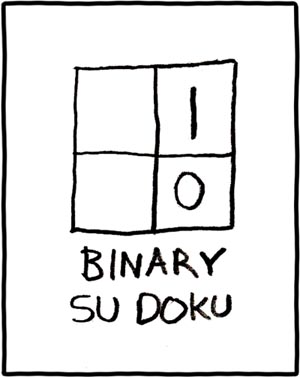
The graphic at the head of this post is from Jessica Hagy's excellent blog: Indexed. Her simple illustration of the essential identity to all family structures was the inspiration for this post. If you haven't already familiarized yourself with her art and intellect, please do so immediately.
27 April, 2007
20 April, 2007
Fluid Dynamics
For those that don't know, I'm something of a math/science geek. So when I saw these YouTube videos posted at Good Math, Bad Math, I knew that I had to post them here as well. Both are illustrations of the interesting and unusual properties of certain liquids.
The first is a demonstration and explanation of the "Kaye Effect" which is, as Mark Chu-Carroll notes:
The second is a demonstration of a phenomena most likely known to just about any cook who has ever made gravy or had to thicken a sauce. When cornstarch is added to water in the proper proportion it forms what's known as a "non-Newtonian fluid" (so-called because the properties of the resulting suspension don't conform to Newton's conception of viscosity). What this means in simple terms is that the viscosity of the fluid will vary with the amount of stress or strain applied. When mixing cornstarch with water, one might notice, for example, that it's easy to pour the syrupy liquid, but that a spoon dropped into the measuring cup will bounce off of the surface, just as if it were solid. A couple of guys (it looks like they're from a Spanish talk show) took advantage of this unusual property to create a situation where they can almost literally walk on water. A very effective demonstration of the manner in which stress/strain alters the viscosity of the fluid: stepping down increases strain and thus increases the viscosity while remaining motionless decreases strain and decreases the viscosity. Again, very cool:
HT: Good Math, Bad Math
The first is a demonstration and explanation of the "Kaye Effect" which is, as Mark Chu-Carroll notes:
...you take a substance like liquid shampoo, and allow a thin stream of it to pour down from a height onto a smooth surface, the stream will periodically "bounce", producing a stream leaping up from the point of contactApparently the phenomena wasn't particularly well-understood and the researchers who made the video are suggesting a possible cause. The video is really cool:
The second is a demonstration of a phenomena most likely known to just about any cook who has ever made gravy or had to thicken a sauce. When cornstarch is added to water in the proper proportion it forms what's known as a "non-Newtonian fluid" (so-called because the properties of the resulting suspension don't conform to Newton's conception of viscosity). What this means in simple terms is that the viscosity of the fluid will vary with the amount of stress or strain applied. When mixing cornstarch with water, one might notice, for example, that it's easy to pour the syrupy liquid, but that a spoon dropped into the measuring cup will bounce off of the surface, just as if it were solid. A couple of guys (it looks like they're from a Spanish talk show) took advantage of this unusual property to create a situation where they can almost literally walk on water. A very effective demonstration of the manner in which stress/strain alters the viscosity of the fluid: stepping down increases strain and thus increases the viscosity while remaining motionless decreases strain and decreases the viscosity. Again, very cool:
HT: Good Math, Bad Math
Another conservative thinker contra D'Souza
I've neglected some of my regular blog readings for awhile, but when I caught up on Darwinian Conservatism, I note that Prof. Larry Arnhart echoed the concerns I've expressed earlier regarding Dinesh D'Souza's recent book and his general turn towards the neo/theo-conservative lunacy of Ann Coulter and her disgusting ilk. An interesting quote below, but please do read the full article at the link.
D'Sousa argues that "conservatives must move closer to the traditional Muslims" (287). His fundamental claim is that moral debate today is divided sharply between two positions. On the one side, conservatives believe in a religious morality as rooted in "an external moral order" and "external commands." On the other side, liberals believe in a secular morality of the inner self, "the morality of self-fulfillment" (18-20). The liberals' secular morality of self-fulfillment promotes moral corruption through hedonistic self-indulgence and materialism. Traditional Muslims believe that this liberal morality will destroy their religion and their way of life. And American conservatives, D'Sousa insists, should admit that they are right. America really is morally corrupt insofar as liberal morality has prevailed in American life. American conservatives should join with fundamentalist Muslims in fighting against the corruption of such secular morality.
I would say, however, that D'Sousa has created a false dilemma in assuming that our choice is between a religious morality of theocracy and a secular morality of hedonism. Darwinian conservatism respects religious belief insofar as it supports our natural moral sense. But that natural morality stands on its own--as rooted in human nature--regardless of our religious beliefs. We do not have to choose between a morality of "external commands" or a morality of "the inner self." We can recognize traditional morality as founded in our evolved human nature.
12 April, 2007
Kurt Vonnegut, 1922-2007
 Kurt Vonnegut, celebrated author and Humanist, died yesterday at age 84. Apparently, he had suffered brain injuries after a fall at his home a few weeks ago, but whether or how these contributed to his death is not mentioned in any of the obituaries I found online.
He was one of the most interesting authors of the twentieth century, whose novels often contained humanist and existentialist themes. He was also known as something of a curmudgeon, after the tradition of Mark Twain, due to his irascible nature and often biting commentary on individuals or institutions with whom he disagreed.
Vonnegut was a Laureate of the Academy of Humanism and the honorary president of the American Humanist Association
He will be missed.
11 April, 2007
Said the Pot to the Kettle...
Sam Harris (Author of The End of Faith and Letter to a Christian Nation) and Andrew Sullivan (Former editor of The New Republic and author of The Conservative Soul) have been having an extended online dialogue regarding faith (or, "God, faith, and fundamentalism" as Beliefnet explains it). If you're interested in such things and haven't yet read their postings, I recommend doing so; good points have been made on both sides.
However, in a posting at his blog earlier today, Sullivan responds to a reader's question regarding statements made by other readers on their perception of Andrew's "inability" to answer some of Sam's questions. The reader writes:
The reader goes on to say:
If this isn't just a most egregious case of the pot calling the kettle black, I don't know what is. In reality, it's believers, not non-believers, who reject mystery by attempting to bottle it up inside the label "god". The questions that Sam posed for Andrew (alluded to by the reader) are not the "ultimate questions" the answer to which (at least for the time being) may well indeed be "mystery", but questions about exactly why Andrew chooses to label these mysteries "god". Non-believers don't withhold belief because they're looking for some specific answer, they withhold belief because the given answer ("god") doesn't seem like a good one. And we ask believers to justify why they settled on that particular answer, not demand that they provide answers to all of those "ultimate questions".
I mean, really, let's look at the questions for which Sullivan's reader thinks non-believers are requiring definitive answers and compare our responses with those of believers:
Who am I?
Non-believer: I don't know, who do you want to be?
Believer: You are a child of God.
What do I want?
Non-believer: I don't know, what do you want?
Believer: You want whatever God wants you to want.
Why do I love this person?
Non-believer: There could be many reasons, some of them based on chemical attractors and some based on emotion. In the end, it's because both of you have characteristics that attract the other, but no one knows precisely why we love any particular person other than the reasons that might be revealed by our preferences.
Believer: Because God wants you to love and be loved.
What is the meaning of this experience?
Non-believer: It has whatever meaning you invest in it.
Believer: Whatever God intends.
Where did I come from?
Non-believer: Simplistically, your mother's womb. Metaphysically speaking, the "I" is a psychological construct created by the mind which is in turn a product of the brain. But exactly how self-awareness develops is currently a mystery.
Believer: God created you.
Why am I here?
Non-believer: That is a question only you can answer, if at all. There may be no answer available.
Believer: God has a purpose for you and in time you may discover it.
Of course, all of these answers are simplistic and a little "tongue-in-cheek", but I think they are representative of the general types of responses one will actually get from both sides of this debate. So, please tell me again who is "allergic" to mystery?
Now I fully agree with Sullivan that epistemological humility is absolutely essential to a liberal democracy (he specifically says conservatism, but I think he'd agree with my broader application), but such humility is not likely to be found in anyone who believes that God exists and occasionally whispers in her ear, elucidating the difference between right and wrong.
Sullivan also mentions that he finds agnosticism "...far more persuasive than atheism." But that assumes that they are incompatible. In fact, they're not. Agnosticism is a position on knowledge (from the Greek gnosis) while atheism is a position on belief. One can be both agnostic AND atheist at the same time. Such a position is often referred to as weak atheism, wherein one recognizes that while one doesn't know whether or not a god exists, one finds no reason to believe that it does.
"God" is the believer's way of wrapping mystery up in a tidy package so they can pretend that it doesn't matter. Don't worry about all those "big questions"; Someone knows the answer so you can just rest easy. Far from being allergic to such questions, it's simply the belief that "god" represents a real answer to them that we find difficult to swallow.
We don't reject mystery. We're not allergic to it. . We reject attempts by believers to explain away mystery by covering it with a sheet and calling it "god". And when we're asking for "answers", we're asking why we need our own sheet instead of just being satisfied with the mystery until we find a better answer. One that actually makes sense. That is the question Andrew's readers are suggesting he has not yet answered. And they're right.
However, in a posting at his blog earlier today, Sullivan responds to a reader's question regarding statements made by other readers on their perception of Andrew's "inability" to answer some of Sam's questions. The reader writes:
I've been catching glimpses of your conversation with Sam Harris. But what's caught my eye have been the e-mails from your detractors like this one and this one and this one. The last one in particular, which asks,
"Do you think God knows that you won't have very good answers to the points Sam Harris brings up at the end of his last reply?"
got me thinking that this obsession with "good answers" points to something close to the heart of this frustration with faith, something you touched on in your last post to Sam - the concept of mystery. Not the Colonel-Mustard-in-the-library-with-a- candlestick kind of mystery, but the awe-and-humility-before-truths-and- experiences-greater-than-we-are-and-deeper-than-we-can-grasp kind of mystery. Seekers like you and I aren't afraid of it, and find our lives are invigorated by it. Some, however, seem allergic to it.
Huh? Wuzzat? Non-believers are "allergic" to mystery while believers embrace it?
The reader goes on to say:
To which Sullivan replies:Maybe this is the fundamental disconnect between believers and non-believers - that the latter insist on answers, and if the answer appeals in any way to mystery, then the answer must be wrong. But practical human experience shows us that mystery is all around us, and that answers to even the simplest questions often cannot be found or must bow, at least somewhat, to mystery - not as a cop-out or a catch-all explanation, but as a humble acceptance of the limitations of human understanding and the possibility that the answers are more than we can know.
Sometimes, instead of finding answers, we just have to live the questions. And we do. We all do. Every day. This is the real world and our experience of it: no matter how much we know, most of the important stuff is steeped in mystery. Strange that some athiests, who fashion themselves realists, cannot accept that simple reality.
This reality is, in my view, the core basis of all true religious faith and the only solid philosophical foundation for political conservatism. It's also why I find agnosticism far more persuasive than atheism.To which I say: Holy Crap.
If this isn't just a most egregious case of the pot calling the kettle black, I don't know what is. In reality, it's believers, not non-believers, who reject mystery by attempting to bottle it up inside the label "god". The questions that Sam posed for Andrew (alluded to by the reader) are not the "ultimate questions" the answer to which (at least for the time being) may well indeed be "mystery", but questions about exactly why Andrew chooses to label these mysteries "god". Non-believers don't withhold belief because they're looking for some specific answer, they withhold belief because the given answer ("god") doesn't seem like a good one. And we ask believers to justify why they settled on that particular answer, not demand that they provide answers to all of those "ultimate questions".
I mean, really, let's look at the questions for which Sullivan's reader thinks non-believers are requiring definitive answers and compare our responses with those of believers:
Who am I?
Non-believer: I don't know, who do you want to be?
Believer: You are a child of God.
What do I want?
Non-believer: I don't know, what do you want?
Believer: You want whatever God wants you to want.
Why do I love this person?
Non-believer: There could be many reasons, some of them based on chemical attractors and some based on emotion. In the end, it's because both of you have characteristics that attract the other, but no one knows precisely why we love any particular person other than the reasons that might be revealed by our preferences.
Believer: Because God wants you to love and be loved.
What is the meaning of this experience?
Non-believer: It has whatever meaning you invest in it.
Believer: Whatever God intends.
Where did I come from?
Non-believer: Simplistically, your mother's womb. Metaphysically speaking, the "I" is a psychological construct created by the mind which is in turn a product of the brain. But exactly how self-awareness develops is currently a mystery.
Believer: God created you.
Why am I here?
Non-believer: That is a question only you can answer, if at all. There may be no answer available.
Believer: God has a purpose for you and in time you may discover it.
Of course, all of these answers are simplistic and a little "tongue-in-cheek", but I think they are representative of the general types of responses one will actually get from both sides of this debate. So, please tell me again who is "allergic" to mystery?
Now I fully agree with Sullivan that epistemological humility is absolutely essential to a liberal democracy (he specifically says conservatism, but I think he'd agree with my broader application), but such humility is not likely to be found in anyone who believes that God exists and occasionally whispers in her ear, elucidating the difference between right and wrong.
Sullivan also mentions that he finds agnosticism "...far more persuasive than atheism." But that assumes that they are incompatible. In fact, they're not. Agnosticism is a position on knowledge (from the Greek gnosis) while atheism is a position on belief. One can be both agnostic AND atheist at the same time. Such a position is often referred to as weak atheism, wherein one recognizes that while one doesn't know whether or not a god exists, one finds no reason to believe that it does.
"God" is the believer's way of wrapping mystery up in a tidy package so they can pretend that it doesn't matter. Don't worry about all those "big questions"; Someone knows the answer so you can just rest easy. Far from being allergic to such questions, it's simply the belief that "god" represents a real answer to them that we find difficult to swallow.
We don't reject mystery. We're not allergic to it. . We reject attempts by believers to explain away mystery by covering it with a sheet and calling it "god". And when we're asking for "answers", we're asking why we need our own sheet instead of just being satisfied with the mystery until we find a better answer. One that actually makes sense. That is the question Andrew's readers are suggesting he has not yet answered. And they're right.
10 April, 2007


09 April, 2007
Julia Sweeney
Former Saturday Night Live actress Julia Sweeney has written and performs a one-woman show titled "Letting Go of God", about her journey from Roman Catholicism to Atheism. I downloaded the show from iTunes and it is fantastic. Very funny yet thoughtful and touching at the same time. Well, Sweeney gave a performance of her show at this year's T.E.D. conference and the opening portion is available on YouTube:
Hilarious, no? In case this whets your appetite for the full show (and I hope it does), you can find it on Amazon or iTunes, among other places.
HT: Friendly Atheist
Hilarious, no? In case this whets your appetite for the full show (and I hope it does), you can find it on Amazon or iTunes, among other places.
HT: Friendly Atheist

02 April, 2007
Conservative, Liberal, & Progressive: we're all in the same boat
Over at Gay Species, an excellent and insightful survey of the current American political landscape.
Stephen Heersink provides a concise summary of the three major viewpoints currently dominating American politics along with characterizations of the "minor" divisions within each. He also discusses, albeit briefly, some of the weaknesses and strengths of each. He closes with a reflection on what appears to be the widening gap between the two major, as he seems them, factions:
Wow. But I can't say that I disagree. In my opinion, we as a nation face today a far greater and more insidious threat than we have ever before faced: ourselves. We are in the very real danger of losing our liberty to fear and seem to have completely lost sight of the fact that a democracy not only provides its citizens the freedom to be politically active, it actually requires that they all be so.
Coincidentally, the actor Richard Dreyfuss was on NPR's Bob Edwards Weekend on Sunday discussing his latest project: the restoration of Civics to American high school curricula. In his discussion, Dreyfuss articulated essentially the same fear as I: that we have lost, or never learned, the knowledge of how to be citizens in a democratic republic. During the 1960-70's, Civics was eliminated from the high school curriculum and the "relevant" subject matter pushed into History and/or Social Studies classes. In hindsight, I think we can say that was a mistake. If we expect our society to function effectively, the people who make it work simply must understand how it works and what they must do in order for it to work properly. If we fail to inculcate this knowledge in our young people, we have only ourselves to blame if they lack it when the time comes for them to lead.
While I would say that it's likely too soon for there to be a causal link between the lack of Civics courses and the current state of political discourse, it's all too obvious that if we want to improve the situation it's going to take a lot of knowledgeable people working to together and without those knowledgeable people, we've got a much smaller chance of ever changing anything.
Stephen Heersink provides a concise summary of the three major viewpoints currently dominating American politics along with characterizations of the "minor" divisions within each. He also discusses, albeit briefly, some of the weaknesses and strengths of each. He closes with a reflection on what appears to be the widening gap between the two major, as he seems them, factions:
Given that few people are even speaking the same language in the same way, much less accurately, the Dominionist Progressives and Social Conservatives have been the dominant actors. Among today's elected officials, few can be described as "liberal." Indeed, our national dialogue has become immensely confused and confusing, because of the disparate systems and lack of clarity and ambiguous references.
It is not the Rhetoric of Indeterminacy, but the Rhetoric of Demagoguery that prevails. The fascist, autocrat, the cheater, the peddlers of anodynes, talking heads, and others who are frustrated, confused, and uncertain of any political ideas that find the present vacuum to be propitious for demagoguery, license, and abuse. Some dare call it despair. I call it shameful and dangerous.
Wow. But I can't say that I disagree. In my opinion, we as a nation face today a far greater and more insidious threat than we have ever before faced: ourselves. We are in the very real danger of losing our liberty to fear and seem to have completely lost sight of the fact that a democracy not only provides its citizens the freedom to be politically active, it actually requires that they all be so.
Coincidentally, the actor Richard Dreyfuss was on NPR's Bob Edwards Weekend on Sunday discussing his latest project: the restoration of Civics to American high school curricula. In his discussion, Dreyfuss articulated essentially the same fear as I: that we have lost, or never learned, the knowledge of how to be citizens in a democratic republic. During the 1960-70's, Civics was eliminated from the high school curriculum and the "relevant" subject matter pushed into History and/or Social Studies classes. In hindsight, I think we can say that was a mistake. If we expect our society to function effectively, the people who make it work simply must understand how it works and what they must do in order for it to work properly. If we fail to inculcate this knowledge in our young people, we have only ourselves to blame if they lack it when the time comes for them to lead.
While I would say that it's likely too soon for there to be a causal link between the lack of Civics courses and the current state of political discourse, it's all too obvious that if we want to improve the situation it's going to take a lot of knowledgeable people working to together and without those knowledgeable people, we've got a much smaller chance of ever changing anything.
26 March, 2007
Homervolution!
The opening to last night's Simpsons episode was sheer delight, showing Homer evolving from single-celled organism to modern man in one long connected sequence. Via Pharyngula, I see that it's available on YouTube, so I'll embed it here for anyone who didn't see it.
Bill Maher uses the "T" words...
Those words being "treason" and "traitor". He uses them to describe Bush/Cheney et al and I can't say that I disagree. The President's lack of regard for the Constitution and the rule of law in this country can no longer be described any other way. Can you say "impeachment" and "stand trial for crimes against the Constitution"? Well, a substantial number of Americans apparently still can't, but Bill can because he doesn't mince words and is willing to say what over 50% of us are thinking. I don't always agree with him, but he's right on the money in this YouTube clip.
HT: Dispatches from the Culture Wars
HT: Dispatches from the Culture Wars
City Council Prayers Update
A little more than a month ago I posted an article regarding sectarian prayers being used to open meetings of the Forsyth County Commissioners. According to an Americans United email update I recently received, AU and the NC chapter of the ACLU are moving forward with a lawsuit against the County and are looking for individuals to serve as plaintiffs. Such persons must be residents of Forsyth County and ideally will have witnessed sectarian prayers prior to January 2007 (when the lawsuit discussions first began). If interested, please contact the ACLU of North Carolina or the NC chapter of AU.
07 March, 2007
Chad Vader
If you haven't heard of or seen these videos yet, they're a must watch. Imagine, if you will, Darth Vader's younger, not-quite-so-evil-or-accomplished younger brother on earth and working in an all-night grocery store as a shift manager. Hilarity ensues. The films are sort of Star Wars parody mixed with a keen sense of the ridiculousness of the mundane and petty with most of the humor coming from the outlandish manner in which these two things combine. The production values, including acting, sets, costumes, and story lines are, for the most part, quite high and if you don't laugh at loud every second, you'll certainly find more than a few chuckles. Well worth the time.
The first episode is embedded below, and you can see all of them on either YouTube or at the production company's homepage.
The first episode is embedded below, and you can see all of them on either YouTube or at the production company's homepage.
04 March, 2007
The Coultergeist strikes again...
The thoroughly despicable Ann Coulter continues to spew her bile. During a recent speech given at a meeting of the Conservative Political Action conference, she was giving her opinion of candidates in the upcoming presidential race and remarked, "I was going to have a few comments on the other Democratic presidential candidate, John Edwards, but it turns out that you have to go into rehab if you use the word 'faggot,' so I'm - so, kind of at an impasse, can't really talk about Edwards, so I think I'll just conclude here and take your questions," While it's unsurprising that a degenerate like Coulter would use such a disgusting slur, her remarks were followed by applause. How much lower can the current crop of neo-conservatives sink?
For me, the question remains: when will this repulsive clown's fifteen minutes be over? Her books Slander and Treason showed her to be a sharp-tongued, lying, debased shrew. Her most recent tome, Godless, demonstrated again her utter disregard for truth as well as revealed her to be an anti-science, anti-intellectual dim-bulb. She might well have titled it "Brainless"; at least it would have been a more accurate description of its contents.
But in spite of all of this she continues to have readers and supporters. At the Volokh conspiracy, commentator Orin Kerr notes:
HT: Dispatches from the Culture Wars (for links to the Volokh articles)
Update: Conservative blogger Andrew Sullivan has numerous articles and links regarding this story at his blog. Well worth the visit...
For me, the question remains: when will this repulsive clown's fifteen minutes be over? Her books Slander and Treason showed her to be a sharp-tongued, lying, debased shrew. Her most recent tome, Godless, demonstrated again her utter disregard for truth as well as revealed her to be an anti-science, anti-intellectual dim-bulb. She might well have titled it "Brainless"; at least it would have been a more accurate description of its contents.
But in spite of all of this she continues to have readers and supporters. At the Volokh conspiracy, commentator Orin Kerr notes:
If Ann Coulter were a liberal, conservatives would denounce her as a perfect symbol of how modern liberalism has lost all sense of decency. But Coulter's a conservative, so how does a conservative audience respond when Coulter makes a "faggot" joke about a Democratic Presidential candidate? With laughter and applause. Yes, laughter and applause. Just pathetic.Indeed, it is pathetic. What in hell is going on? Doesn't common decency demand that we reject such hate-filled and blatantly dishonest rhetoric? Has the modern neo-conservative movement now completely abandoned even the pretense of holding the moral "high-ground"? Also at Volokh, Illya Somin writes,
When Coulter was fired by National Review back in 2001, I hoped that she would be rejected by most other mainstream conservatives, and swiftly fade into oblivion. Unfortunately, I was overly optimistic. While some conservatives - and perhaps more libertarians - have indeed rejected her, too many have not. The very fact that she was invited to address the Conservative Political Action Conference, a major movement conservative event, is a sign of her continued good standing for much of the right. The fact that the previous speaker - prominent Republican presidential candidate Mitt Romney - praised her, is another. But perhaps it's not too late for those conservatives who continue to accept her to make up for lost time.It should be noted that of the current Republican Presidential hopefuls, both John McCain and Mitt Romney's campaigns have issued statements disassociating themselves from her remarks. And Ed Brayton points out that The Malcontent has a list of conservative blogs and prominent Republicans who have rejected Coulter and her filth. While it's certainly a step in the right direction, the right has a long way to go in demonstrating that such bigotry isn't as common as many of us in the middle or left seem to think it might be...
HT: Dispatches from the Culture Wars (for links to the Volokh articles)
Update: Conservative blogger Andrew Sullivan has numerous articles and links regarding this story at his blog. Well worth the visit...
02 March, 2007

28 February, 2007
Mobile blogging test

That's Loki on the left and Riley on the right...
Subscribe to:
Posts (Atom)


 Posts


